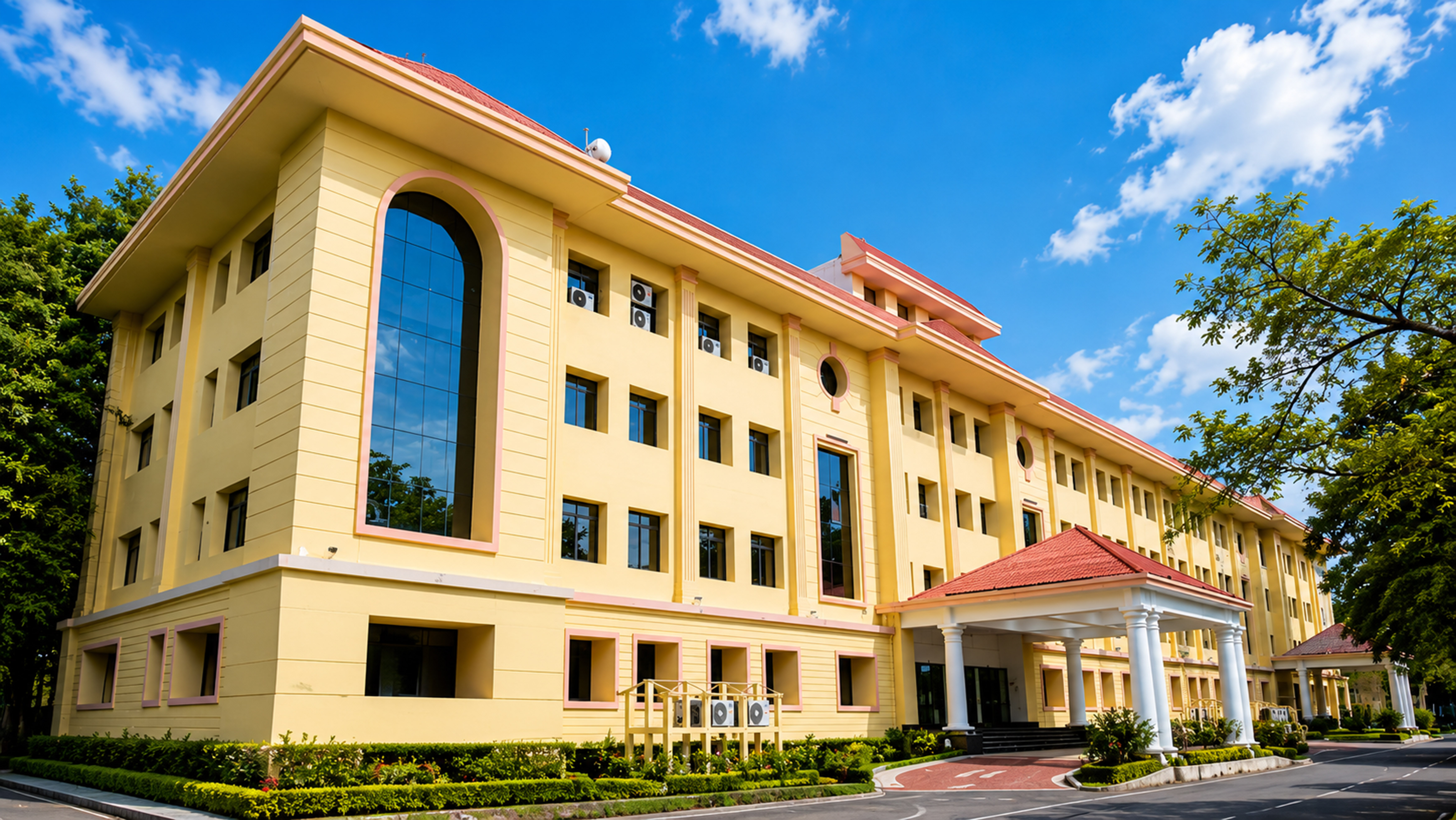
Sichai Bhawan
Redevelopment of Sichai Bhawan at Patna, Bihar.
Project Facts
- Area: 5 Acres
- Budget: INR 25 Crores
- Project year: 2023
- Client: BCD Patna
- Location: Patna, Bihar
The redevelopment of Sichai Bhawan in Patna represents a thoughtful transformation of an existing institutional facility into a more efficient, contemporary, and functionally responsive administrative building. The project was envisioned to modernize the infrastructure while retaining a sense of familiarity and institutional identity, ensuring continuity with its original character.
The design approach focuses on rational planning and spatial optimization, addressing the evolving needs of a government office environment. Internal layouts have been restructured to improve workflow efficiency, accessibility, and user comfort, while maintaining clear zoning between administrative, operational, and support areas. The redevelopment ensures that the building aligns with present-day standards of functionality without disrupting its operational continuity.
Architecturally, the building adopts a refined and composed language, characterized by clean lines, balanced proportions, and subtle classical undertones. The façade treatment introduces a sense of order and rhythm through repetitive window patterns, vertical elements, and carefully articulated openings. The use of a muted color palette enhances the institutional character while ensuring durability and ease of maintenance.
A prominent entrance portico defines the arrival experience, lending the building a sense of dignity and formality appropriate for a public administrative facility. The integration of vertical glazing elements and recessed openings allows for improved natural lighting within interior spaces, contributing to a more comfortable and energy-efficient environment.
The redevelopment also incorporates upgrades in building services and infrastructure, ensuring long-term sustainability and operational efficiency. Care has been taken to integrate modern systems seamlessly within the existing framework, minimizing disruption while enhancing performance.
Overall, the Sichai Bhawan redevelopment reflects a balanced approach that combines modernization with contextual sensitivity, delivering a renewed institutional landmark that meets contemporary administrative demands while respecting its legacy.