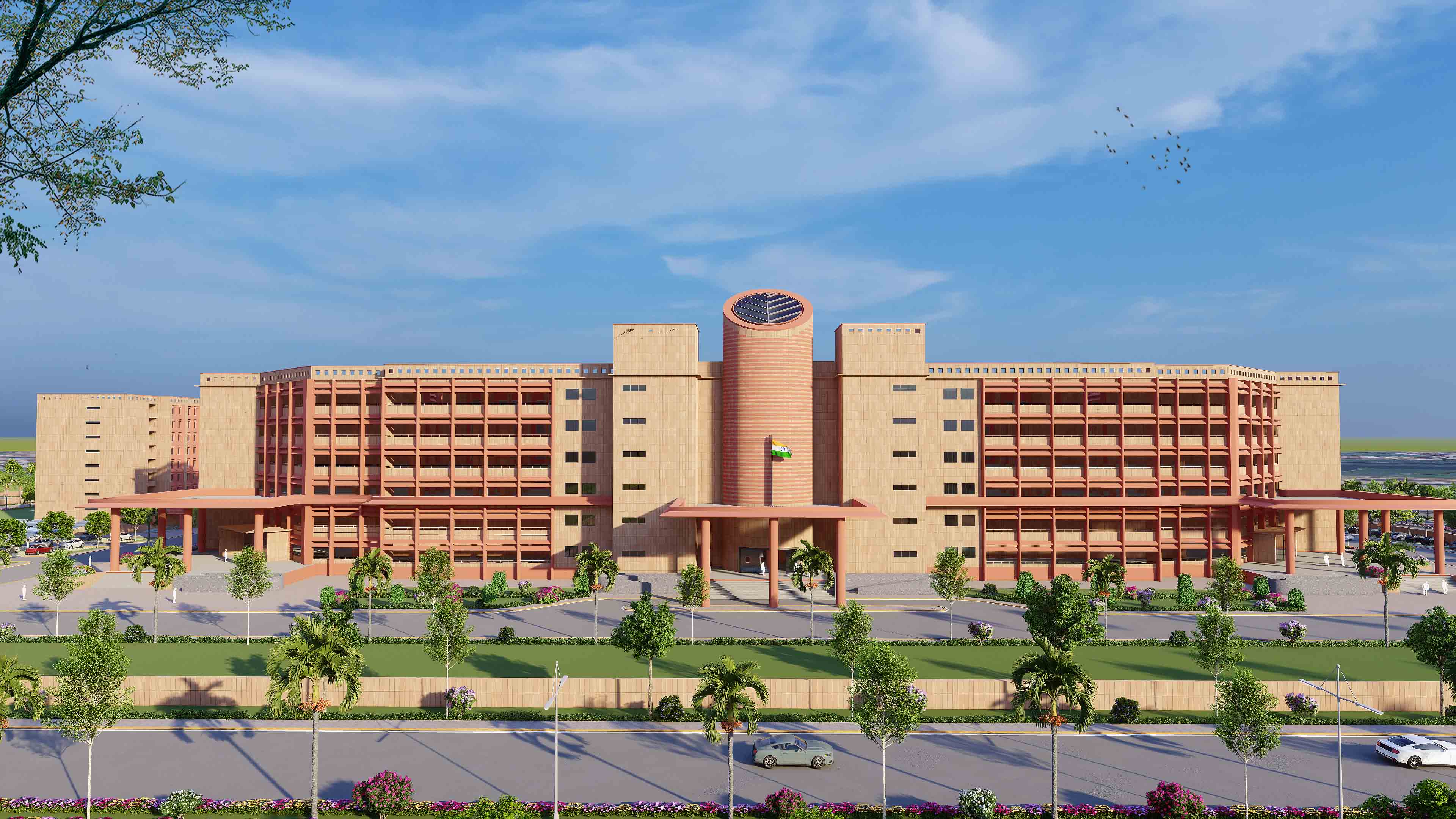
Integrated Court Complex Hapur
Integrated Court Complex Hapur for 37 Courts
Project Facts
- Area: 25 Acres
- Budget: INR 280 Crores
- Project year: 2025
- Client: UPPWD
- Location: Hapur, Uttar Pradesh
Justice by Design: Inside the Integrated Court Complex of Hapur
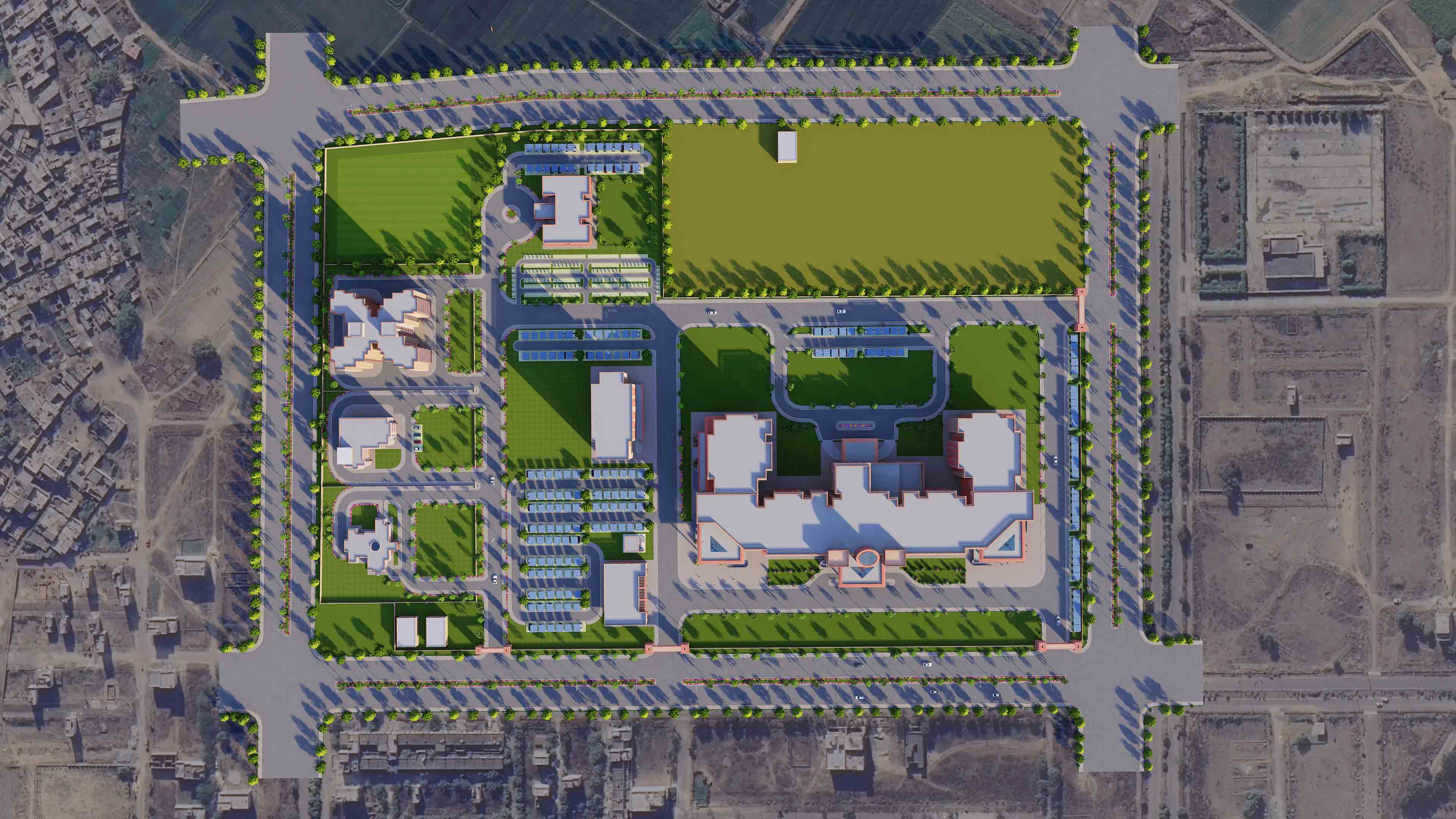
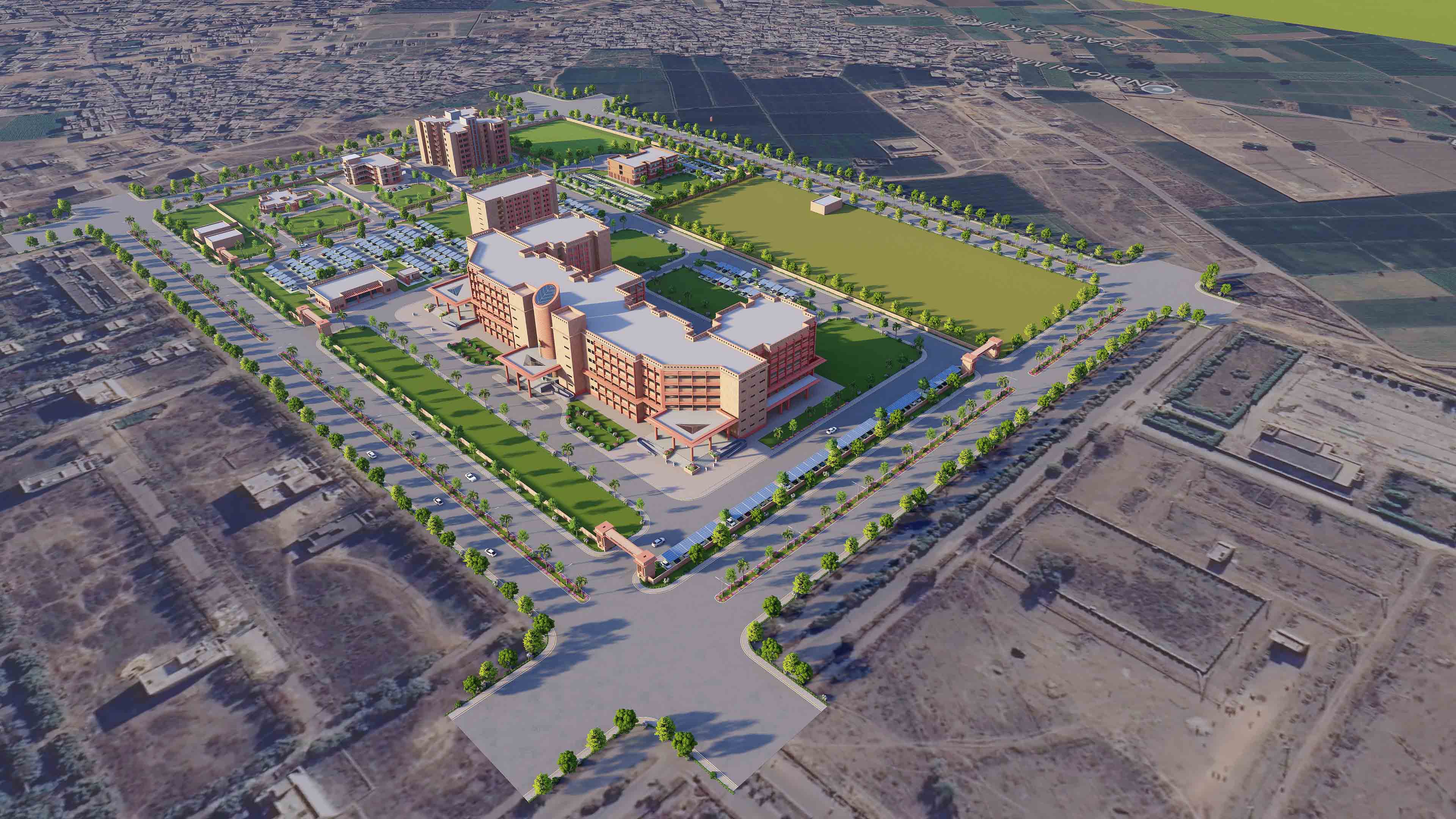
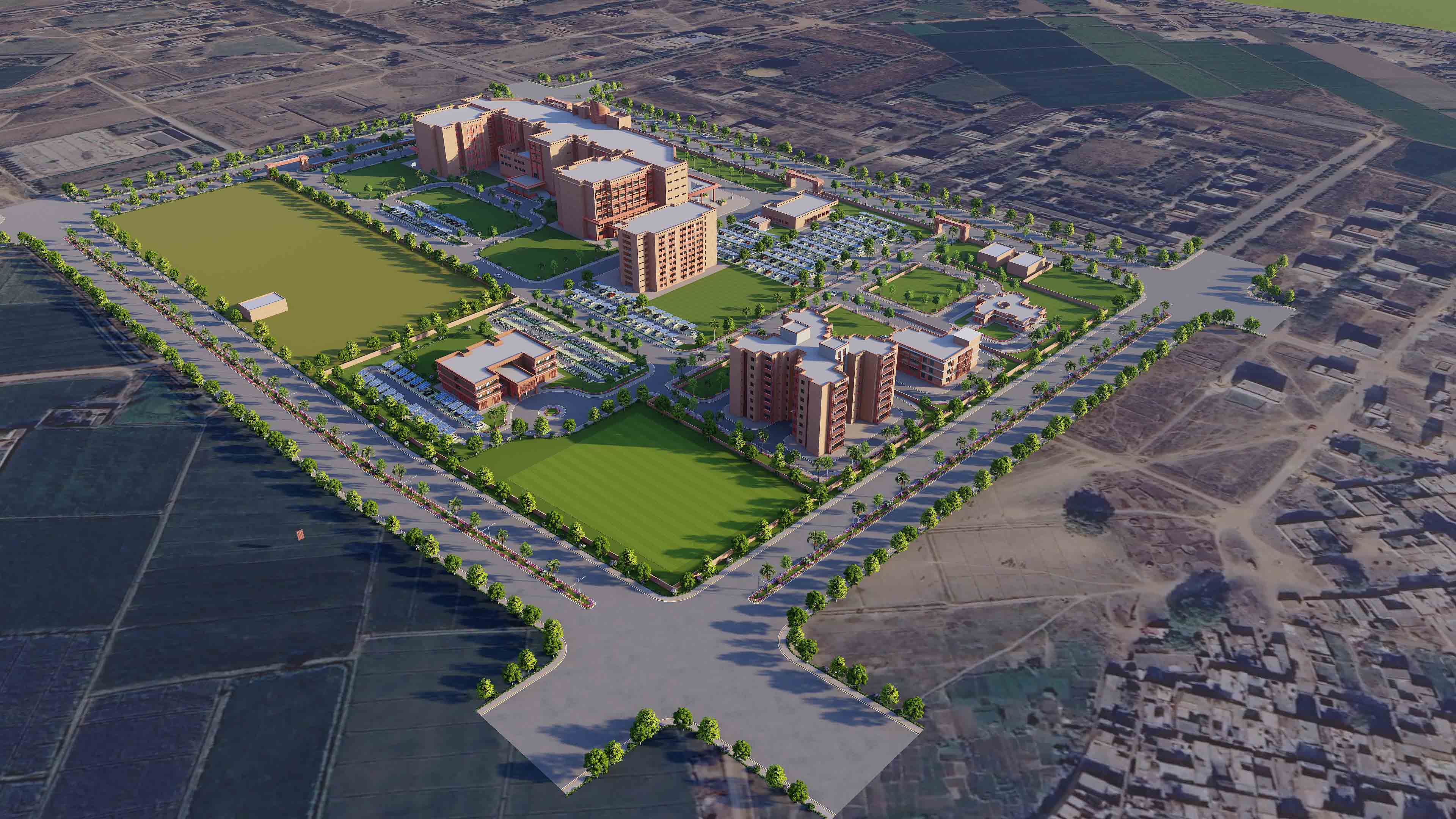
The Integrated Court Complex in Hapur, Uttar Pradesh, is envisioned as a transformative milestone in the state’s judicial infrastructure. Designed as a modern, efficient, and future-ready campus, the project is being developed on a vast 25-acre site and accommodates 37 courts, advocate chambers, a complete residential precinct, and a full suite of civic and support amenities. Located in the culturally layered western region of Uttar Pradesh, Hapur lies in proximity to historic cities and trade routes—an influence that subtly informs the architectural approach of the project. The design responds not only to the administrative needs of the judiciary but also to the socio-cultural fabric of the region.
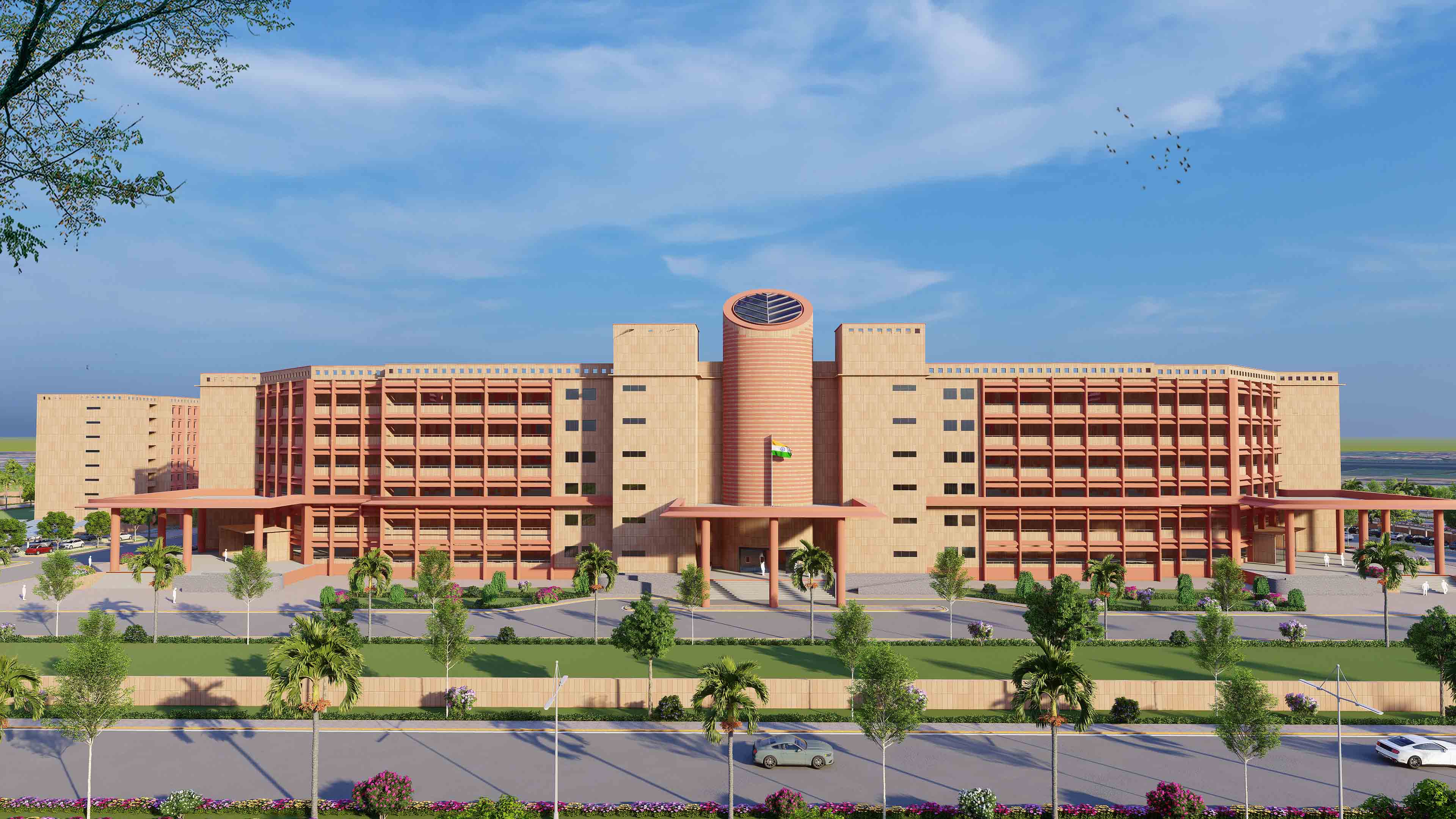
Commissioned by the Government of Uttar Pradesh and executed under EPC mode, the project is master planned by ARCH-EN DESIGN. The layout organizes the campus into clearly defined zones addressing the needs of judges, advocates, litigants, staff, and the general public. The primary Court Building, structured as LG + UG + 5 floors, houses 37 courtrooms, ADR suites, record management facilities, spacious waiting areas, circulation cores, and technology-driven e-filing sections. Complementing this is a G+7 Advocates’ Chamber Block, designed to accommodate senior and junior advocate chambers, a bar association hall, canteen, medical room, post office, and essential service kiosks such as Xerox and stamping.
Residential planning forms a key component of the campus. The precinct includes the District Judge’s residence, Type VI and Type V quarters, and a thoughtfully integrated recreational center. Each living unit is laid out to ensure privacy, comfort, natural ventilation, and secure access. Supporting these facilities is a robust infrastructure backbone comprising a 275 KLD STP, dual 2500 KVA electrical substations, dedicated vehicle sheds, solar-powered street lighting, and over 20 rainwater harvesting pits—all contributing to a self-sustaining and resilient campus.
A core emphasis of the project is climate-responsive design and sustainability. All buildings follow a north–south orientation to harness natural daylight and reduce heat gain. Targeting GRIHA 3-Star certification, the design integrates solar energy systems, energy-efficient HVAC strategies, low-flow plumbing fixtures, and region-specific native landscaping. Compliance with NBC 2016 and ECBC 2017 standards further strengthens the project’s environmental performance and long-term operational efficiency.
Landscape design plays a significant role in shaping the experience of the campus. Shaded pathways, avenue plantations, landscaped courtyards, and art-laden roundabouts bring a sense of dignity and calm to the judicial environment. Permeable paving, water-sensitive hardscape selections, and shaded seating courts ensure usability and comfort throughout the year. Dedicated pockets for children, contemplative spaces, and tree-lined buffers make the complex inclusive and approachable for all stakeholders.
Overall, the Hapur Integrated Court Complex stands as more than just an institutional development—it is a forward-looking symbol of judicial reform where architectural intelligence meets functional excellence. Through its thoughtful planning, sustainability commitments, and people-centric design, the complex sets a compelling benchmark for how India’s justice infrastructure can evolve in the years ahead.