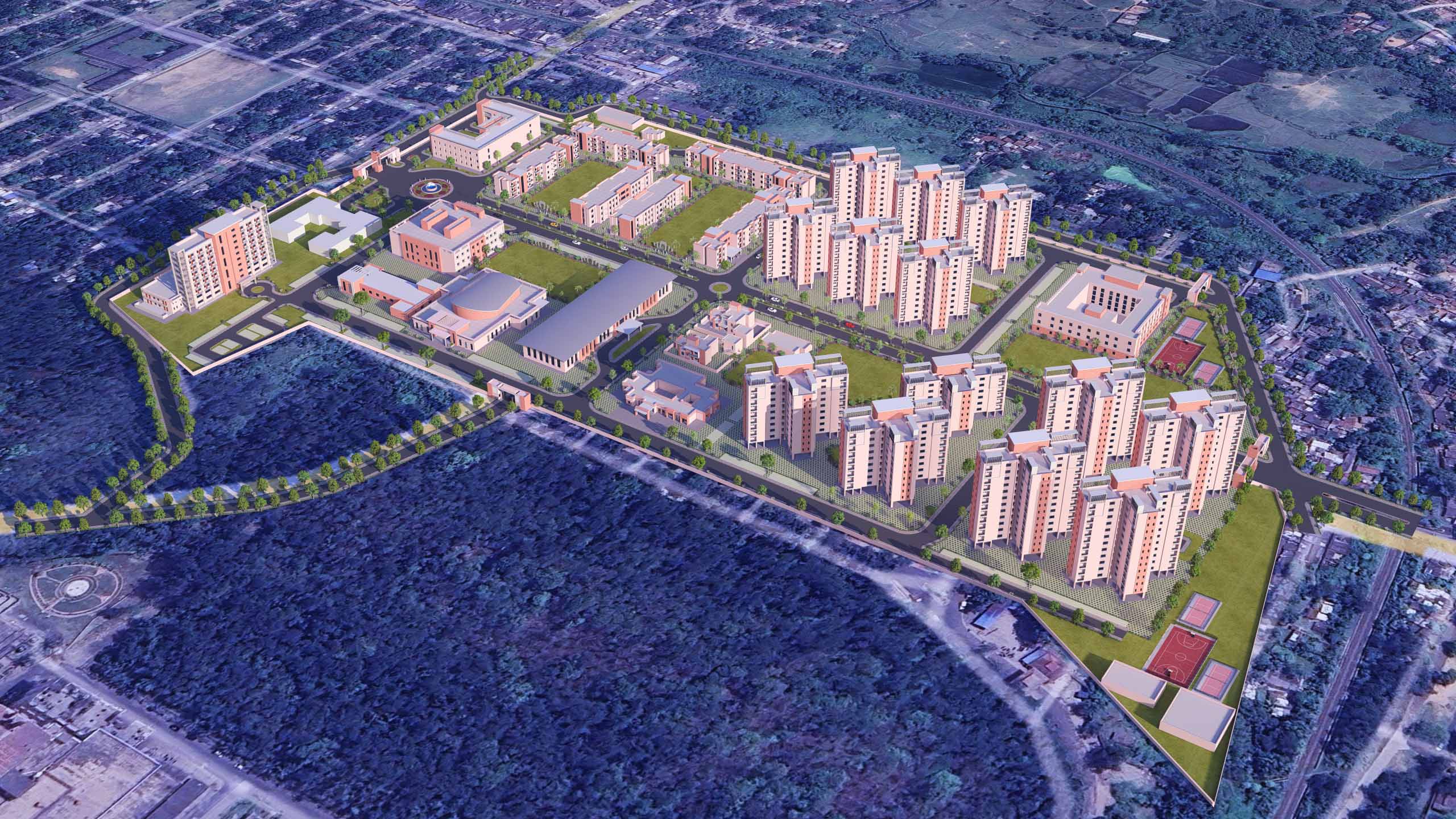
Chandrapura Thermal Power Station (CTPS)
A World-Class Township for DVC at Chandrapura
Project Facts
- Area: 50 Acres
- Budget: INR 600 Crores
- Project year: 2027
- Client: NBCC
- Location: Chandrapura, Jharkhand
AED is proud to be the Architectural and Engineering Design Consultant for the Integrated Township at Chandrapura Thermal Power Station (CTPS), a significant initiative of Damodar Valley Corporation aimed at transforming an existing industrial settlement into a future-ready, world-class township.
Envisioned as a holistic and self-sufficient urban ecosystem, the CTPS township integrates residential, institutional, and community infrastructure into a cohesive masterplan. The design builds upon the legacy of Chandrapura—an established power-generation hub on the banks of the Damodar River—while reimagining it as a contemporary, sustainable, and people-centric environment.
A Vision for a Smart, Inclusive Township
The project aspires to deliver a modern living environment supported by advanced infrastructure and high-quality amenities. The township integrates features such as dedicated cycling tracks, EV charging stations, automated street lighting, and 24-hour CCTV surveillance, ensuring safety, efficiency, and future readiness.
Community life is strengthened through a comprehensive network of facilities including schools, healthcare centres, shopping complexes, sports infrastructure, and community spaces. The planning ensures that daily life, recreation, and essential services coexist seamlessly within walkable distances.
Master Planning for Community and Efficiency
The township is structured into clearly defined zones—residential clusters, institutional buildings, recreational landscapes, and service infrastructure—each interconnected through a well-planned circulation network.
Residential neighbourhoods are designed across multiple housing typologies, catering to diverse user groups from executive housing to staff residences. These are complemented by hostels, guest houses, and community living facilities, ensuring inclusivity across all levels of workforce hierarchy.
Central amenities such as the staff club, auditorium, community hall, and town administration building act as social anchors, fostering a strong sense of community identity.
Landscape as the Core Framework
The township places strong emphasis on landscape-driven planning. A network of green zones—including pocket parks, jogging tracks, open gyms, children’s play areas, and large playgrounds—creates a vibrant and active public realm.
Specialized landscape interventions such as wellness gardens, meditation zones, and shaded seating areas enhance the quality of life while contributing to environmental sustainability. The integration of water bodies and green buffers further improves microclimate and ecological balance.
Sustainability and Future Readiness
Sustainability is embedded as a fundamental design principle. The township incorporates:
• Energy-efficient infrastructure and LED-based lighting systems
• Provision for EV mobility and charging infrastructure
• Solid waste management systems with segregation and recycling
• Water-sensitive planning including treatment and reuse systems
• Extensive green cover and native plantation strategies
The planning approach responds to the regional climate of Jharkhand, ensuring thermal comfort through passive design strategies and landscape integration.
Strategic Location and Connectivity
Located in Chandrapura, within the Bokaro district of Jharkhand, the township benefits from strong regional connectivity. The site is situated in close proximity to Chandrapura Railway Junction and the local bus network, ensuring ease of access for residents and operational efficiency for DVC personnel.
Its strategic position within an established industrial belt enhances its role as a critical support infrastructure for the region’s energy sector.
Beyond Infrastructure: Creating a Living Ecosystem
Through the CTPS township, AED is not merely designing infrastructure—it is crafting a resilient, future-ready urban environment that balances industrial functionality with human-centric design.
The project reflects our commitment to creating integrated communities where sustainability, technology, and quality of life converge—embodying our philosophy: