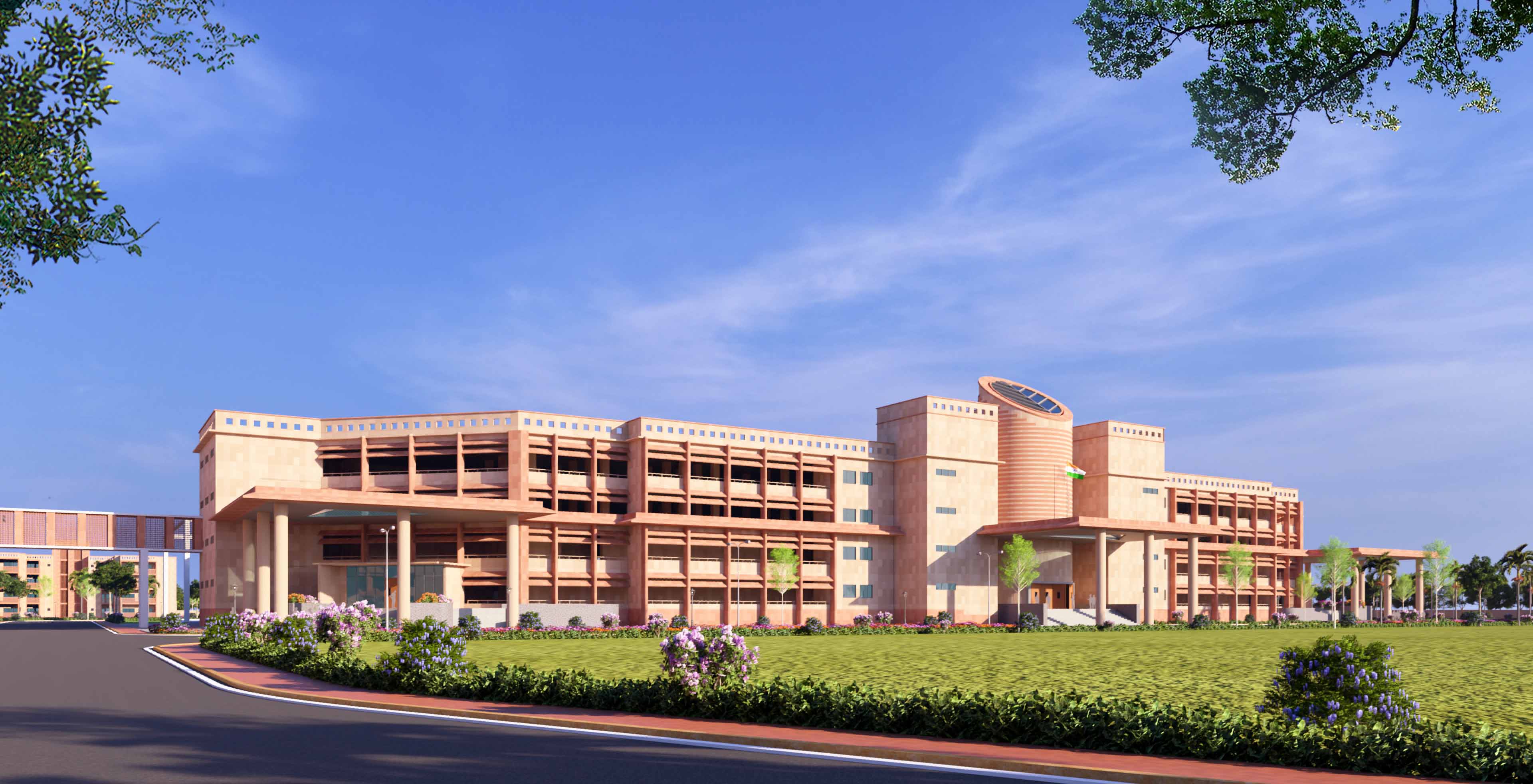
Integrated Court Complex Amethi
Integrated Court Complex Amethi for 17 Courts
Project Facts
- Area: 25 Acres
- Budget: INR 280 Crores
- Project year: 2027
- Client: UPPWD
- Location: Amethi, Uttar Pradesh
The Integrated Court Complex in Amethi, Uttar Pradesh, is envisioned as a modern, efficient, and dignified judicial campus designed to serve the evolving needs of the district judiciary. Planned as a comprehensive institutional development, the complex accommodates 17 courts along with advocate facilities, public amenities, administrative support spaces, and essential infrastructure. The project reflects a balanced approach where judicial functionality, public accessibility, security, and architectural character come together in a cohesive campus environment.
Commissioned by the Government of Uttar Pradesh and detailed by ARCH-EN DESIGN as Detailed Design Consultant to the EPC Contractor, the project has been conceived to create a clear and efficient working environment for judges, advocates, litigants, staff, and visitors. The Court Building has been organized to provide well-planned courtrooms, record rooms, waiting areas, filing sections, administrative offices, and associated support facilities. The planning ensures smooth movement, controlled access, and segregation of different user groups, which is critical for the effective functioning of a court complex.
The design also integrates advocate-related facilities, including chambers, meeting areas, public service zones, canteen facilities, and other essential amenities. These spaces are planned to support the daily functioning of the legal community while maintaining proximity to the court building and ease of access for litigants and visitors.
A key focus of the campus planning is safety, clarity, and user comfort. Separate circulation systems for judges, advocates, undertrial movement, staff, and the public help in maintaining security and operational efficiency. Public areas are designed to be legible and accessible, with shaded waiting zones, clear wayfinding, and comfortable movement corridors.
The architectural approach responds to the institutional importance of the judiciary while remaining rooted in the local context of Amethi. The design language is dignified, restrained, and contemporary, creating a strong civic identity without unnecessary ornamentation. Emphasis has been placed on durable materials, efficient planning, natural light, and long-term ease of maintenance.
Sustainability and climate responsiveness are important components of the design. The buildings are planned to maximize natural light and ventilation, reduce heat gain, and improve energy efficiency. Green measures such as rainwater harvesting, energy-efficient lighting, low-flow plumbing fixtures, shaded walkways, and native landscaping have been incorporated to create a responsible and future-ready judicial campus.
Landscape has been treated as an integral part of the overall campus experience. Avenue plantations, shaded pedestrian paths, green buffers, seating pockets, and organized open spaces help create a calm and respectful environment for all users. The landscape planning enhances comfort, reduces heat island effect, and contributes to the overall dignity of the court complex.
Overall, the Amethi Integrated Court Complex is not merely a court building, but a carefully planned civic institution. With its 17-court capacity, efficient zoning, secure circulation, sustainable features, and user-centric design, the project represents a progressive model for district-level judicial infrastructure in Uttar Pradesh.