
Why we settle orientation, shade, envelope and daylight before reaching for a rating, with evidence from a GRIHA 5-star office in Bhopal and a net-zero campus in Delhi.
Six of our buildings carry GRIHA ratings: the Income Tax Office in Bhopal at five stars, the Apollo Ispat hospital at Rourkela at four, and the Atal Cancer Care Centre in Ambala, the Indian Institute of Skills in Kanpur, Maa Shakumbhari University in Saharanpur and the Atal Residential School in Ayodhya at three. A rating comes at the end. What earns it is a sequence of decisions that starts with the sun and the wind, long before any equipment is chosen.
The order of decisions
1. Orientation and massing
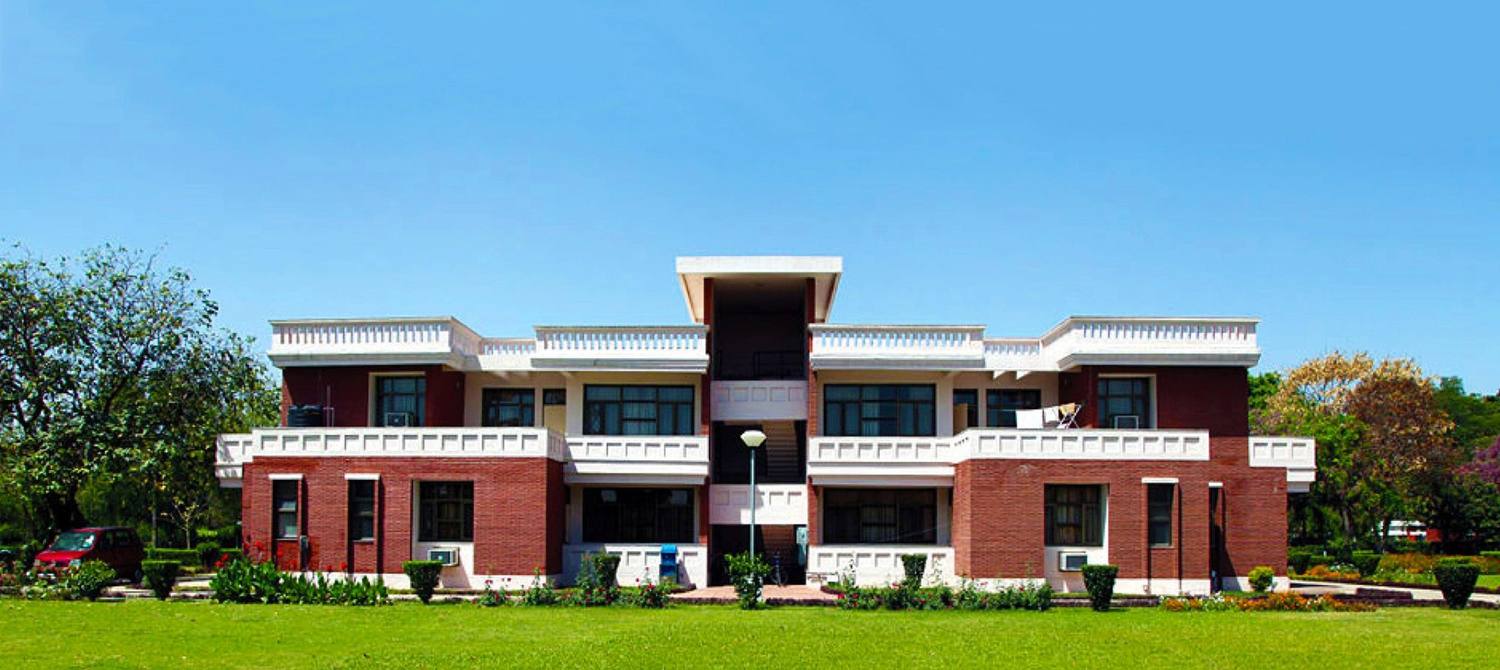
At the UNESCO MGIEP campus in New Delhi, three four-storey blocks are set along an east–west axis so that they shade one another, with landscaped courtyards between them where the stack effect draws air through. Services and stairs sit on the west and south-west as a buffer against the sun.
2. Shade
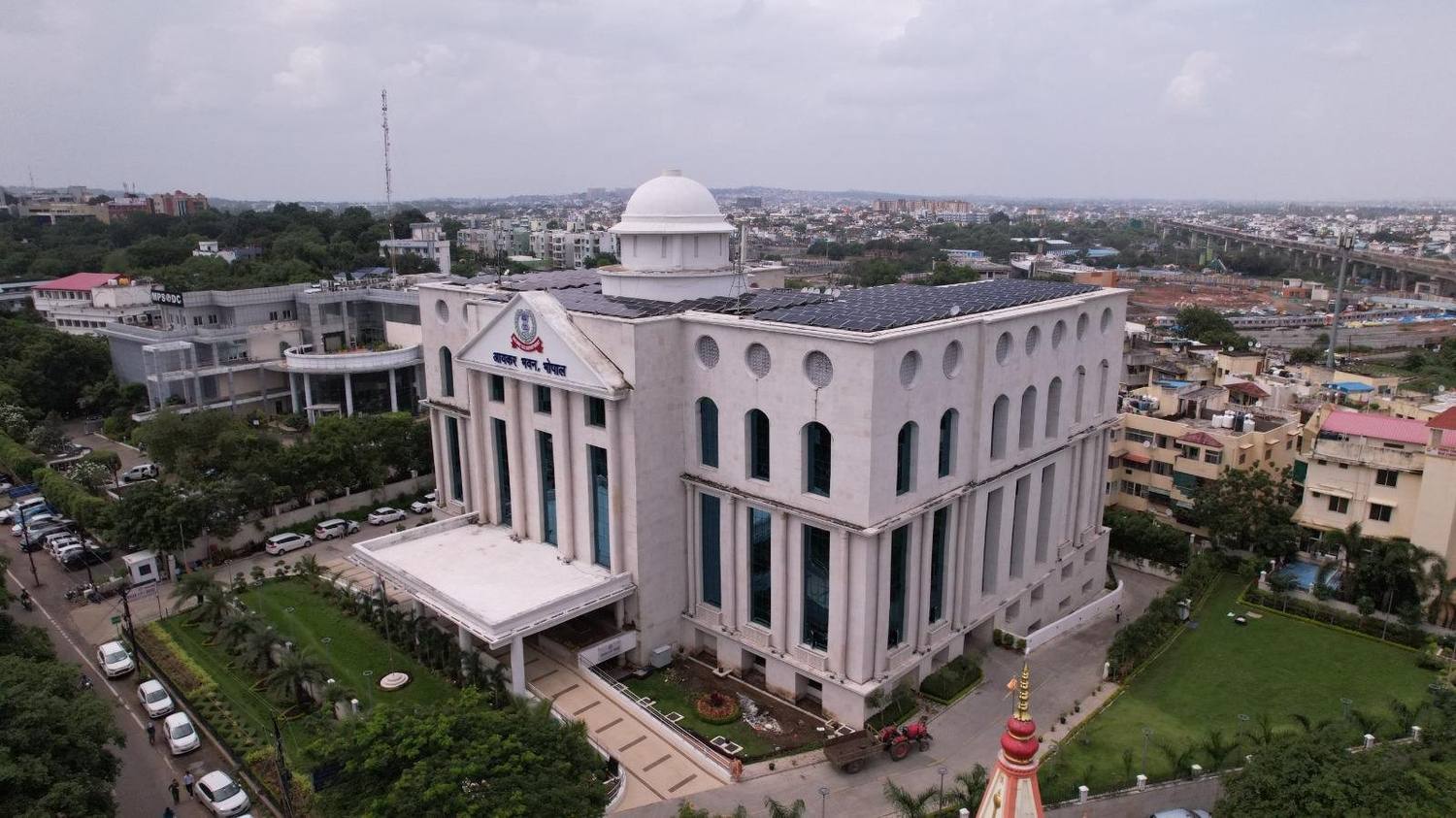
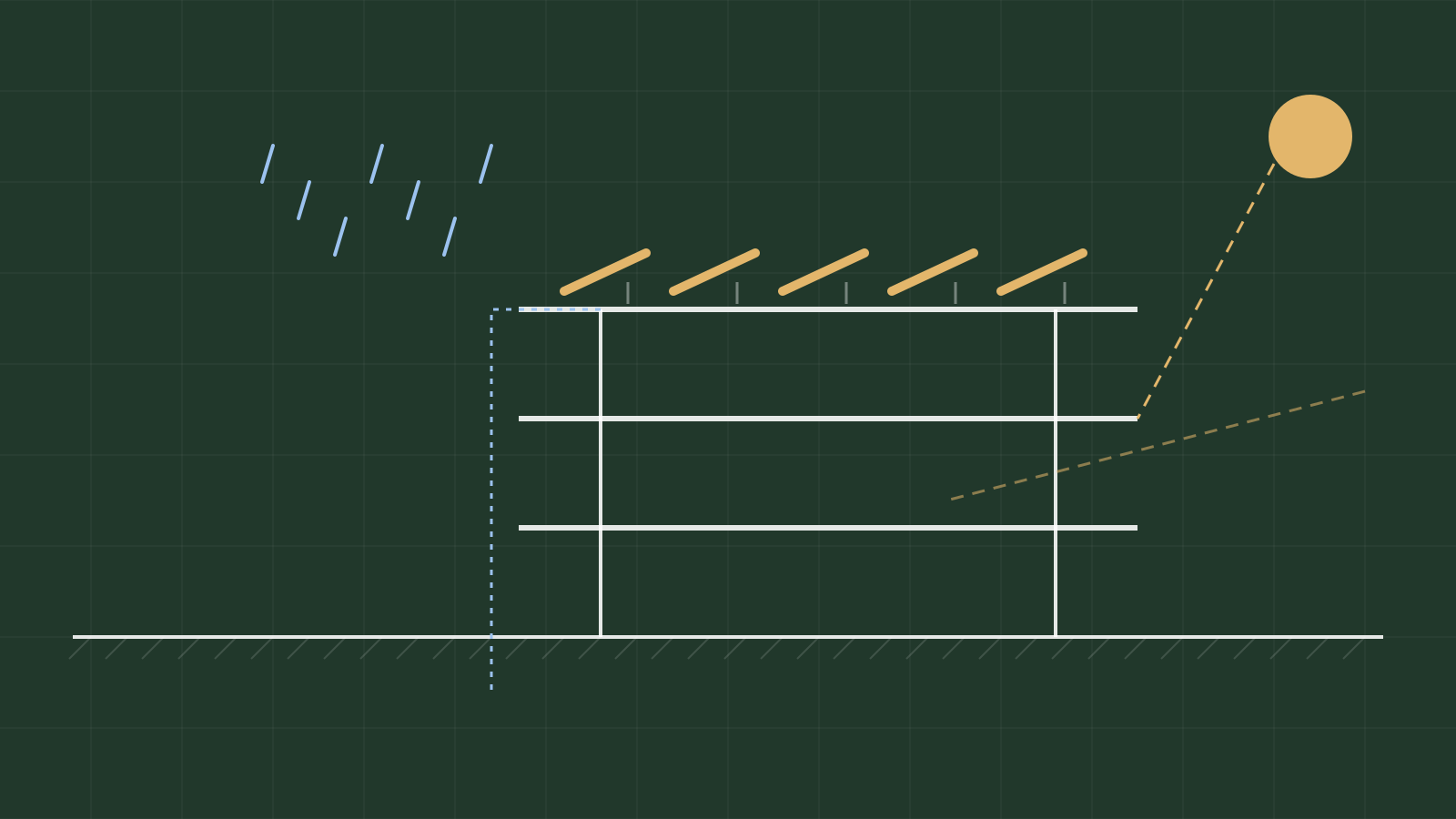
At the Income Tax Office in Bhopal, a colonnade and deep overhangs hold off the high sun. At MGIEP, the solar roof reaches beyond the building to shade the terrace, the south wall and the courtyards.
3. The envelope
At IIT Kanpur, cavity walls improve thermal insulation and windows use solar-control glass. At MGIEP, the south wall is clad in terracotta, the west wall is a double wall of AAC blocks with insulation, and the north and east faces use triple-glazed, low-E units.
4. Daylight
About 90 per cent of the working floor area at MGIEP is daylit. At Bhopal, the envelope is designed around daylight, reducing the need for artificial lighting.
5. Roof and ground
Roofs at IIT Kanpur are finished in brick coba and broken china mosaic to reduce heat gain, and dense planting along the western and southern edges shades the buildings. At Bhopal, planted ground rather than hot paving keeps the air around the building cooler.
6. Water
Rainwater harvesting and low-flow fixtures at Bhopal; at MGIEP, treated water from the sewage treatment plant is reused for flushing and gardens.
7. Only then, renewables
Once the building needs less, panels can supply a meaningful share. At Bhopal, a 150 kW solar system meets about half of the building’s yearly energy use. At MGIEP, the solar roof is estimated to generate slightly more than the building is estimated to need, which is what makes a net-zero design possible.
The evidence
The Income Tax Office in Bhopal received GRIHA Exemplary Performance Awards three years running: in 2023 for renewable energy utilization, in 2024 for passive design and in 2025 for energy management. In 2017 the practice received the Uttar Pradesh State Energy Conservation Award in the Architect sector.
Why the order matters
Orientation, shade and the envelope are decided once and work for the life of the building, at little extra cost. Equipment wears out and is replaced. A building that needs less energy in the first place makes every later measure, from panels to controls, go further.
References
- GRIHA Council. Green Rating for Integrated Habitat Assessment (GRIHA).
- Bureau of Energy Efficiency (2017). Energy Conservation Building Code.