
No. 018 · Education & Research
International Potato Center, South Asia Regional Centre
Agra, Uttar Pradesh
- Location
- Agra, Uttar Pradesh
- Client
- NBCC
- Status
- In design
- Built-up area
- 5,000 m²
- Site area
- 12 acres
- Project value
- ₹40 crore
- Sector
- Education & Research
A research Campus for the International Potato Center's South Asia Regional Centre near Keetham Lake in Agra, where Laboratories, polyhouses and experimental fields are planned as one research environment set into the land.
About the project
The International Potato Center (CIP) South Asia Regional Centre will support research on potato, sweet potato and tuber crops, and on food and nutrition security across South Asia. As part of the CGIAR research network, it links international science with regional farming practice. The Campus is planned so that agriculture, science and environment work as one system.
Starting with the land
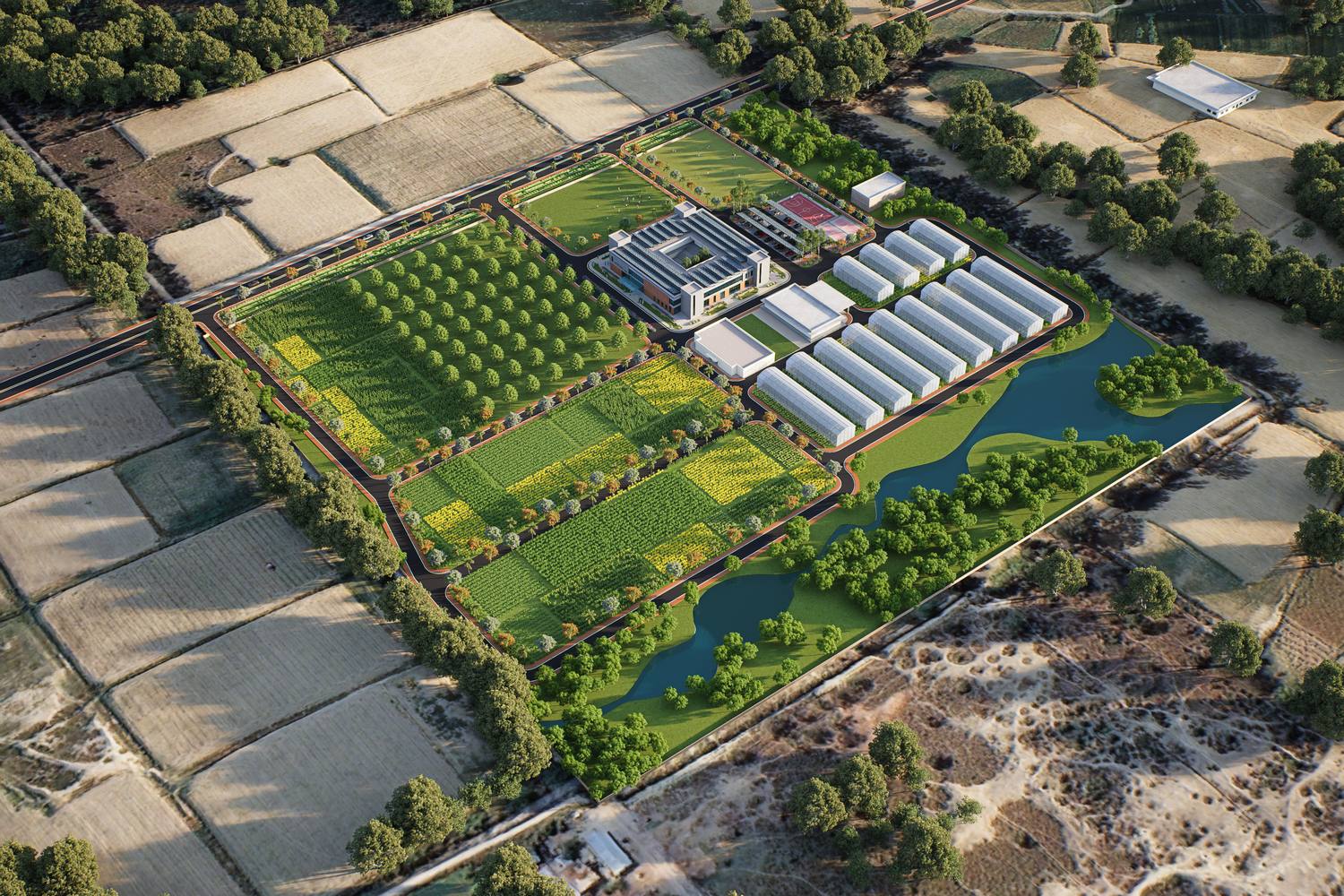
The site lies near Keetham Lake, within the Sur Sarovar ecological zone, in a sensitive landscape shaped by the Yamuna river system and its wetlands. That context became the starting point of the plan. Instead of imposing buildings on the site, the design begins with the land, so that the research facilities sit alongside biodiversity corridors, farmland, orchards and the lake.
Rooted in land, scaling knowledge
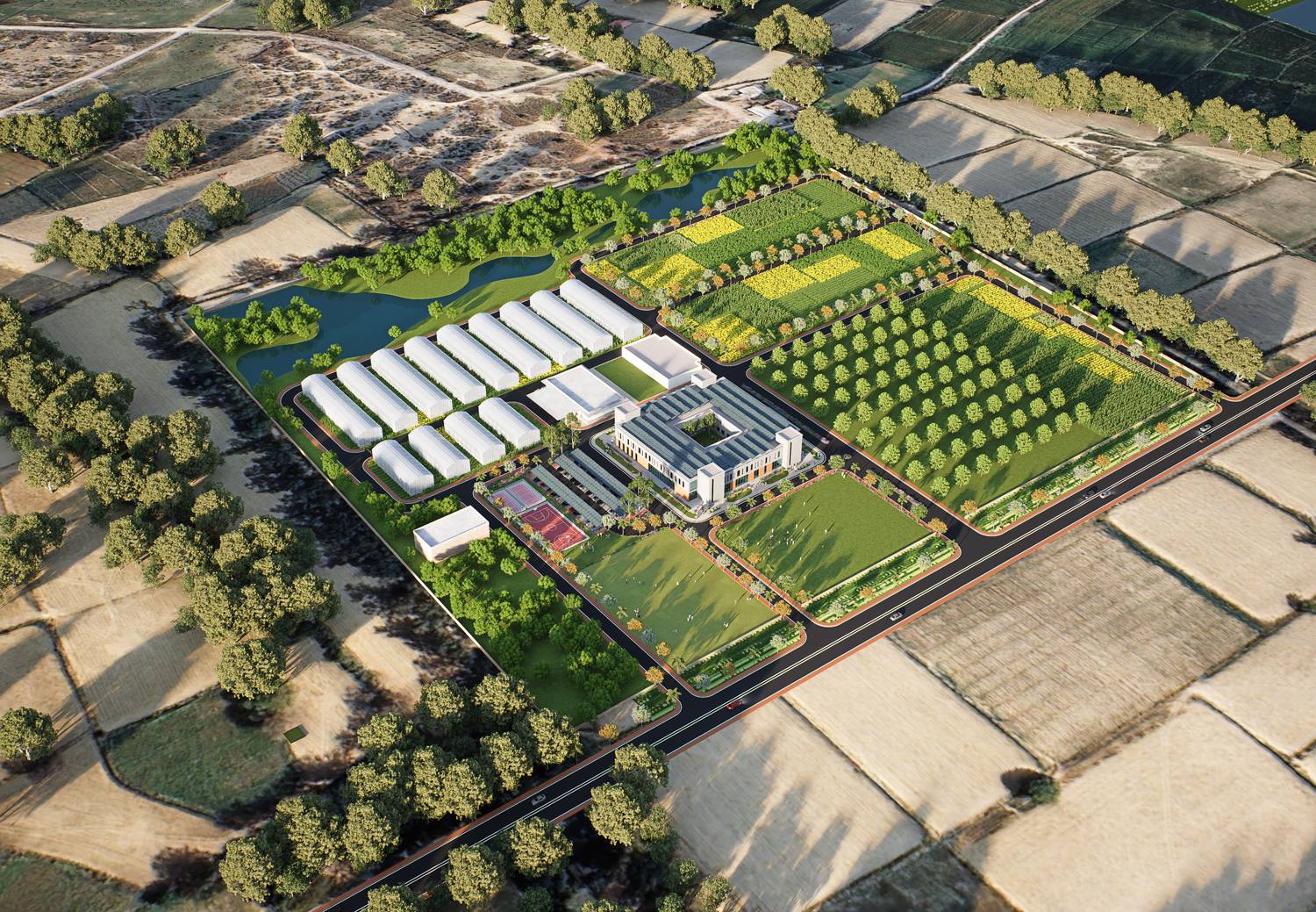
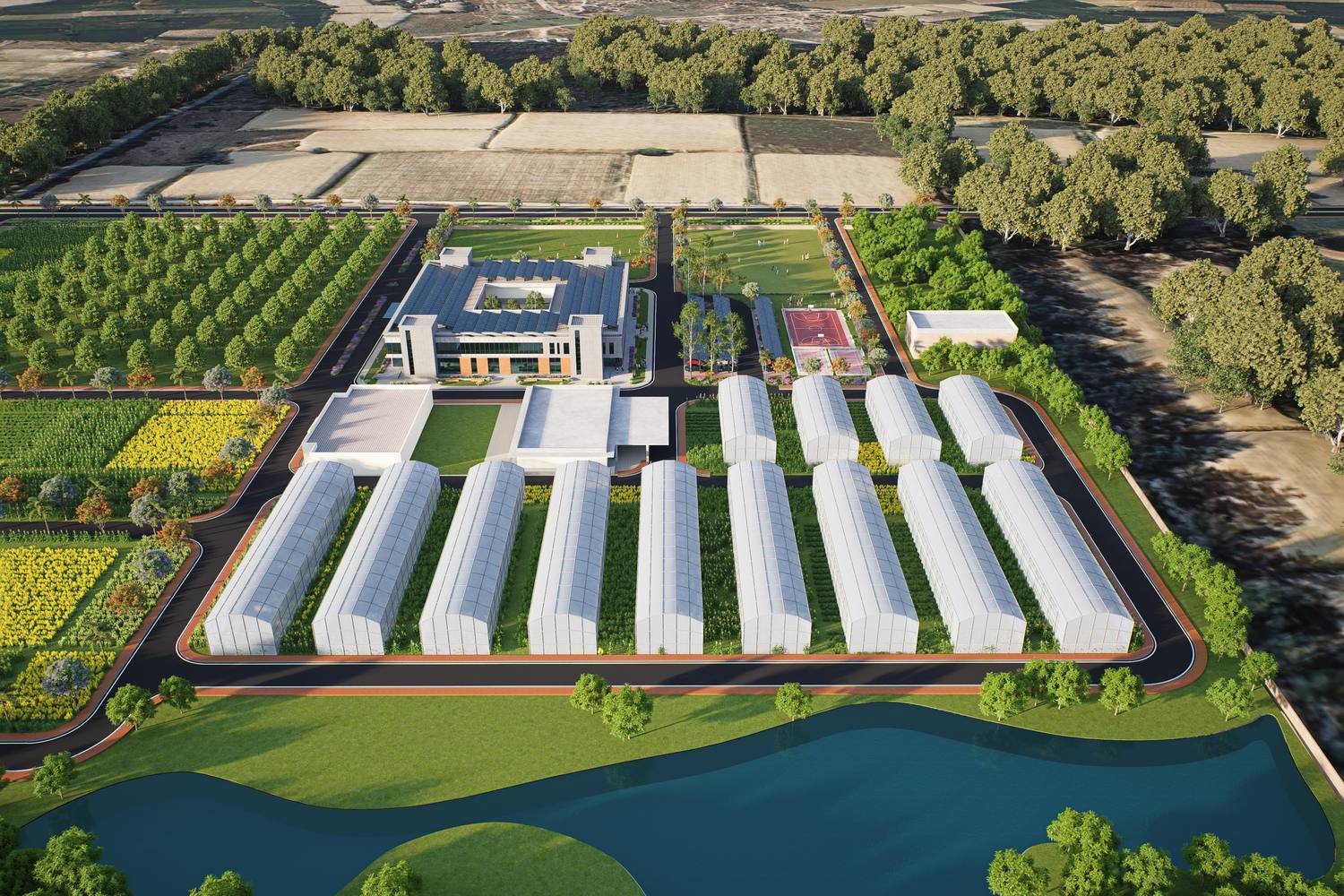
The concept is summed up in that phrase. Laboratories, polyhouses, aeroponic facilities and experimental fields are planned together, so that Laboratory work, crop experiments and agricultural production happen side by side. The Master Plan is a series of connected zones:
- advanced Laboratories
- greenhouses, polyhouses and other controlled cultivation facilities
- open research farmland
- cold storage and post-harvest facilities
- homes and social spaces for scientists and researchers
Because these sit together, research can move from genetic studies to field trials and crop processing within one place.
Restrained buildings
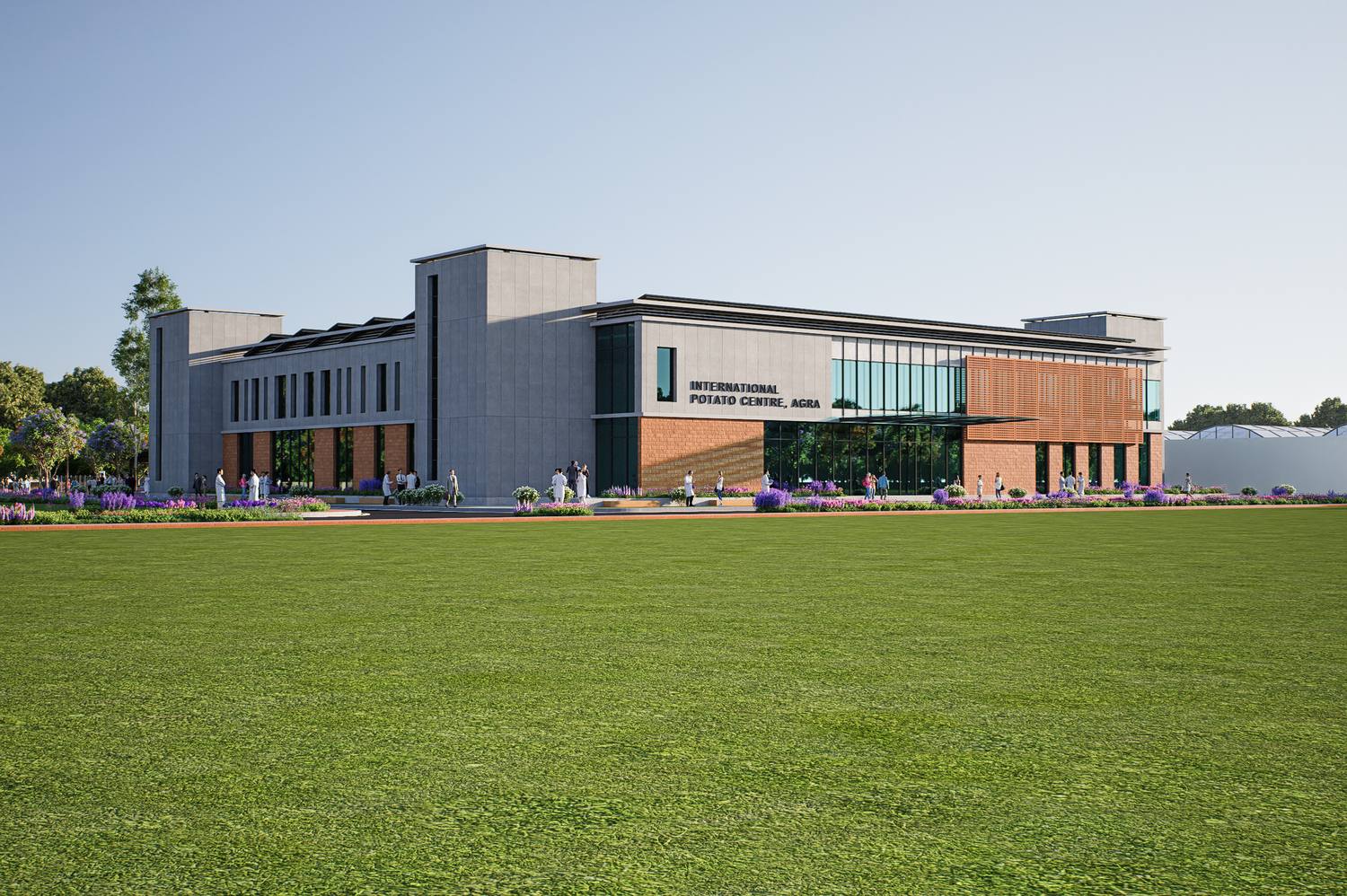
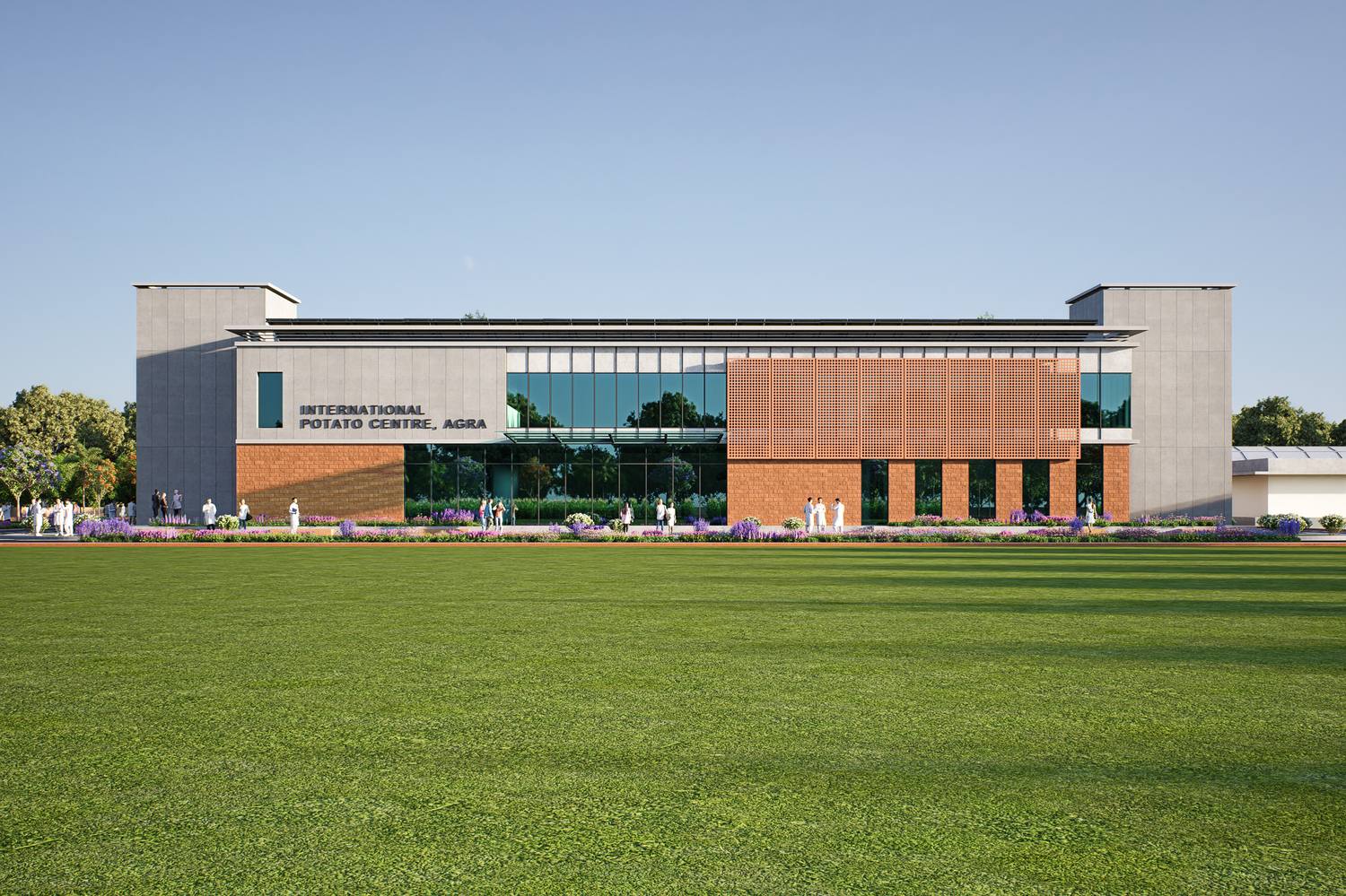
The Architecture is restrained and practical, built around clarity, adaptability and response to climate. The research building sits among lawns, greenhouses and fields, keeping a strong visual and spatial relationship with the land it serves. Rather than striking forms, the aim is durable buildings that stay useful as agricultural technology changes.
Education & Research